Two keys handed back on a Friday, and no idea how many exist
The tenant moves out on a Friday afternoon. Desks go down the stairs, somebody sweeps, and two keys come back across the counter in an envelope. The new tenant takes possession Monday morning and wants to be able to work that day. Between Friday and Monday there is a weekend, which sounds like plenty of time right up until Sunday evening.
Nobody knows how many keys that suite actually had. Four years of a business on the second floor produces keys for the owner, a partner, three employees, a bookkeeper who came Tuesdays, a cleaner with a set for the whole building, and at least one cut at a hardware store because somebody kept losing theirs. The envelope holds two. That is not dishonesty, it is just what four years does.
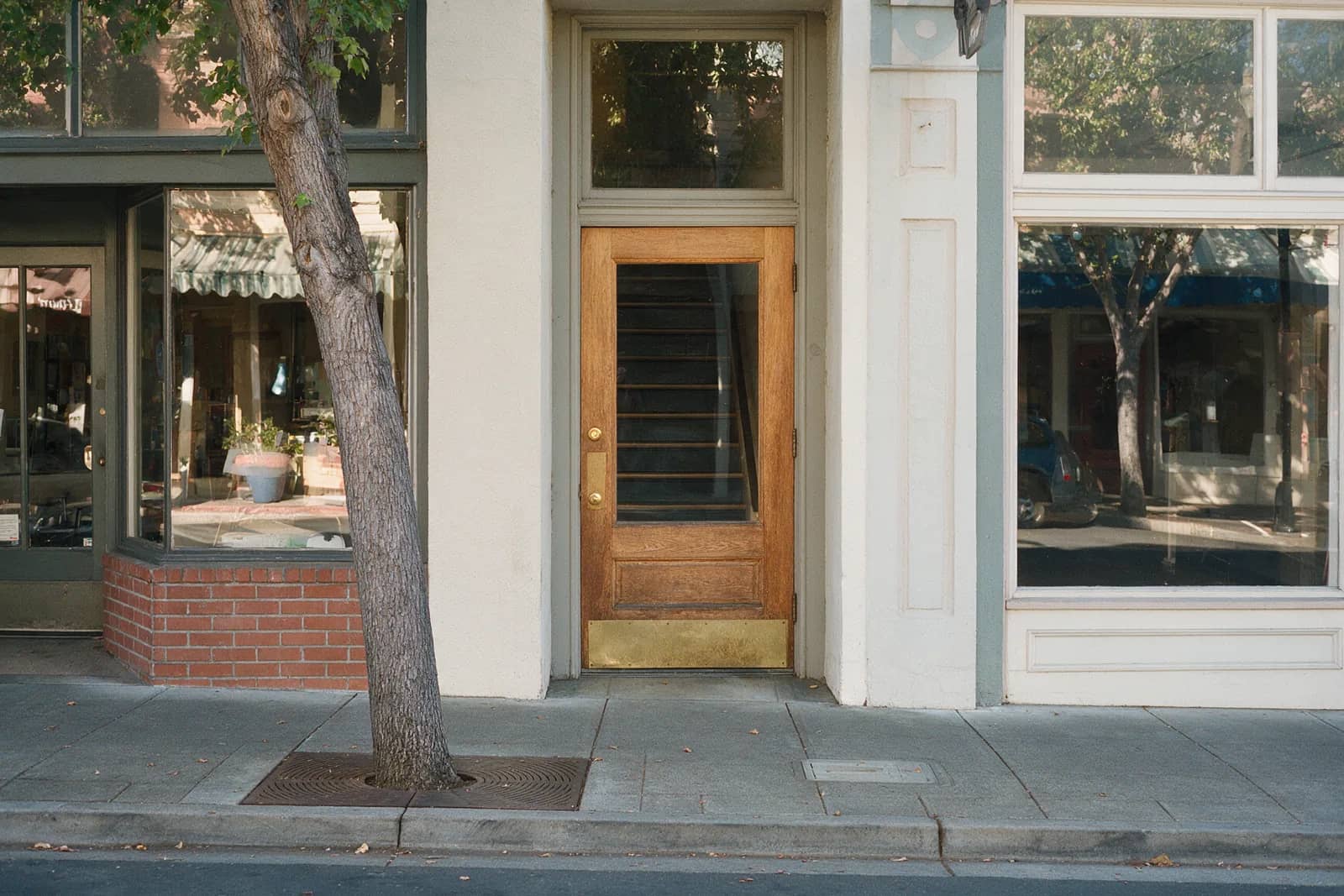
The buildings on Main Street make this a more interesting problem than it would be in an office park. These are 1890s storefronts with a shop at the sidewalk and rooms above it, reached through a plain street door that opens onto a stair. That street door is not the suite door, and knowing the difference between the two is most of what makes this weekend go smoothly.
Count the locks from the sidewalk inward
One: the street door beside the shop window, the narrow one with a transom over it, with a cylinder in it and often a closer overhead. Two: at the top of the stair, sometimes a door onto a landing or a hall. Three: the suite door itself, the one with the tenant's name on the glass. Four: a storage closet in the hall or a space in the basement that came with the lease. Five: the mail block at street level, and sometimes a rear door onto an alley or a small lot behind.
They are not all the same kind of lock and they do not all belong to the same conversation. The suite door is a plain cylinder, usually a lever or knob with a deadbolt above it. The street door is often storefront hardware in an aluminum or wood frame, with a latch and a closer rather than a simple deadbolt. The rear door may have a panic bar on it, because it is the way out in an emergency, and that is a different item again.
Write the five down with a note beside each one saying who uses it. That list is what a phone call to this trade should start with, because it turns a vague weekend job into a quote. It also makes obvious which doors are yours to change and which serve the shop downstairs, the neighbor's suite, or everybody in the building at once.
What to change, and what to leave alone
The suite door is the clear one. Change it before Monday, without exception, and do it even if the outgoing tenant was model quality, because the point is not suspicion. The point is that the new tenant should hold every key that exists to their own space on day one, and nobody should have to take anybody's word about how many were cut. Rekeying is $34 to $52 per cylinder.
The storage closet and any rear door that belongs to that lease go in the same visit. They are small cylinders, they take minutes each, and the trip is paid for once, so they land at the low end of the range. The mail block is usually a cam lock with a short stubby key, and that one is worth checking rather than assuming, because in these buildings mail arrangements differ from address to address.
The street door is the one to think about rather than reflexively change. It serves the shop, the other suites, and whoever else has business in the building, so changing that cylinder means new keys for every one of them by Monday morning. Sometimes the right answer is yes and the whole building gets done at once. Often the better answer is that the suite gets changed now and the street door gets handled on a planned date with everyone notified.
Who orders which piece of work
On a door that serves only one tenancy, the owner or their manager orders the work and that is straightforward. On the street door, the stair, the hall and anything shared with the shop below, it is a door that serves more than one business, and this trade does not decide who has the standing to authorize work on it. We ask who is authorizing, take it from them before a van is sent, and put it in writing where it matters.
That is a two minute conversation on the phone and it is much better had then than at eight in the evening with a technician standing on the sidewalk. It also saves the situation that comes up every few months here: a tenant who calls in good faith about a shared door, unaware that the arrangement with the building says otherwise. Nothing on this page is a ruling about how your building works.
The same boundary applies to any access system already in the building. If there is a fob reader on the street door, this trade works on the mechanical part underneath it, and the list of who is switched on stays with whoever runs that system. We do not add or remove people from somebody else's access platform, and a locksmith offering to do that over the phone is promising something he does not hold.
The numbers for each of the five doors
Rekeying a cylinder is $34 to $52, which covers the suite door, the storage closet, the mail block and any ordinary cylinder in the building, with the $89 service call counted once inside the figure for the trip. Lock replacement with the hardware is $132 to $352, which is what a tired suite door lock or a rear door with a seized cylinder comes to. Storefront door hardware, the latch and closer arrangement in the aluminum or wood street door, is $166 to $505.
If the rear door has a panic bar on it, that is $324 to $836 to replace, and it is worth being honest that a tenant change is a good moment to look at it, because it is the one item in the building that nobody touches until the day it is needed. Access control and master key plans are both quoted by inspection rather than from a list, because both depend entirely on what is already fitted and how many doors have to answer to what.
If the changeover goes wrong and somebody is standing outside a door they are entitled to be behind, a business lockout is $148 to $276 with the $89 inside it. An arrival between 8pm and midnight carries $52, between midnight and 7am $94, both named on the phone before anyone drives. Labor carries 90 days.
The plan a small building actually benefits from
Two or three suites over a shop is exactly the size where a master plan earns its keep. The owner or manager carries one key that opens the street door, the hall, the storage and every suite. Each tenant carries a key that opens the street door and their own suite and nothing else. When a tenant changes, only their cylinder is touched, which is a twenty minute job instead of a weekend and a stack of new keys for everybody.
That is worth setting up between tenants, because that is when the doors are free and nobody is inconvenienced. It is quoted by inspection, since it depends on what hardware is on the five doors already and whether the keyways can be brought into one family. Sometimes one or two cylinders get swapped to make the rest work, and the quote says which ones before anything is ordered.
The other thing worth doing in the same window is the physical state of the doors. A street door with a closer that no longer pulls it fully shut is the most common finding on Main Street, and a door that rests against its strike instead of latching is unlocked in every sense that matters. That is an hour of adjustment rather than new hardware, and it is the sort of thing nobody notices until the building is between tenants.
The weekend, in order
Friday: collect what keys come back and count them, without expecting the number to mean much. Decide which of the five doors are being changed. Call and book, with the list of doors read out, because that decides what is on the van. If the new tenant needs to be in Monday at eight, say that on the call.
Saturday or Sunday: the visit. Suite door, storage, any rear door on that lease, plus the mail block if it belongs to the building rather than to the postal service. Keys get cut, labeled and handed over in a set, and the number of copies handed to the new tenant gets written down somewhere, which is the habit that makes the next changeover shorter. Walk the doors and test every key before the van leaves.
Monday: the new tenant should be able to get from the sidewalk to their desk with the keys they were given, and that is the only test that counts. The base is in Downtown by Main Street, so these addresses are about 12 minutes out against a 19 minute city average, and the office park and center out at Stoneridge and Hacienda run 21. Evening and overnight rates apply if it has to happen after hours, and they are said before anybody starts driving.
Quick answers
A tenant moved out. Which locks do I have to change?+
The suite door without exception, plus any storage or rear door that belongs to that lease, at $34 to $52 per cylinder. The street door is a decision rather than a reflex, because changing it means new keys for the shop and every other suite in the building. Many owners change the suite now and schedule the street door separately with everyone notified.
Can it be done overnight so the new tenant can start Monday?+
Yes. Rekeying a handful of cylinders in an empty suite is a short visit, and it can run in the evening or overnight, with $52 between 8pm and midnight and $94 between midnight and 7am, named on the phone before anyone drives. Read the list of doors out when you book so the right parts are on the van.
Who authorizes work on the street door shared with the shop?+
That gets settled on the call, before a van is sent. A door serving more than one business is not something this trade decides on behalf of anybody, so we ask who is authorizing the work and take it from them in writing where it matters. A door inside a single tenancy is simpler: identification and the work starts when the owner or manager says so.
Need it handled rather than read about?
(925) 940-2823More guides