Nine doors, and the front one is only the loudest
Take a notepad and walk the lot. Front door. The service door on the side of the garage, the one the household actually uses. The gate in the fence line. The pool gate. The cellar door, or the hatch under the deck. The safe in the closet. The room over the garage that somebody works in. The mail block down at the road. The gate at the head of the driveway. That is nine, and it is nine before anyone counts a shed padlock or a cage in the garage. On a bigger lot up the hill it comes to ten.
The front door here is one of nine. That is the shape of the work in this city and it explains why the two most common calls sound nothing alike: open the one door that stopped today, or bring the whole place onto one key. A flat tract house and a hillside house have the same nine. What differs is how far apart they stand and how often anybody touches them.
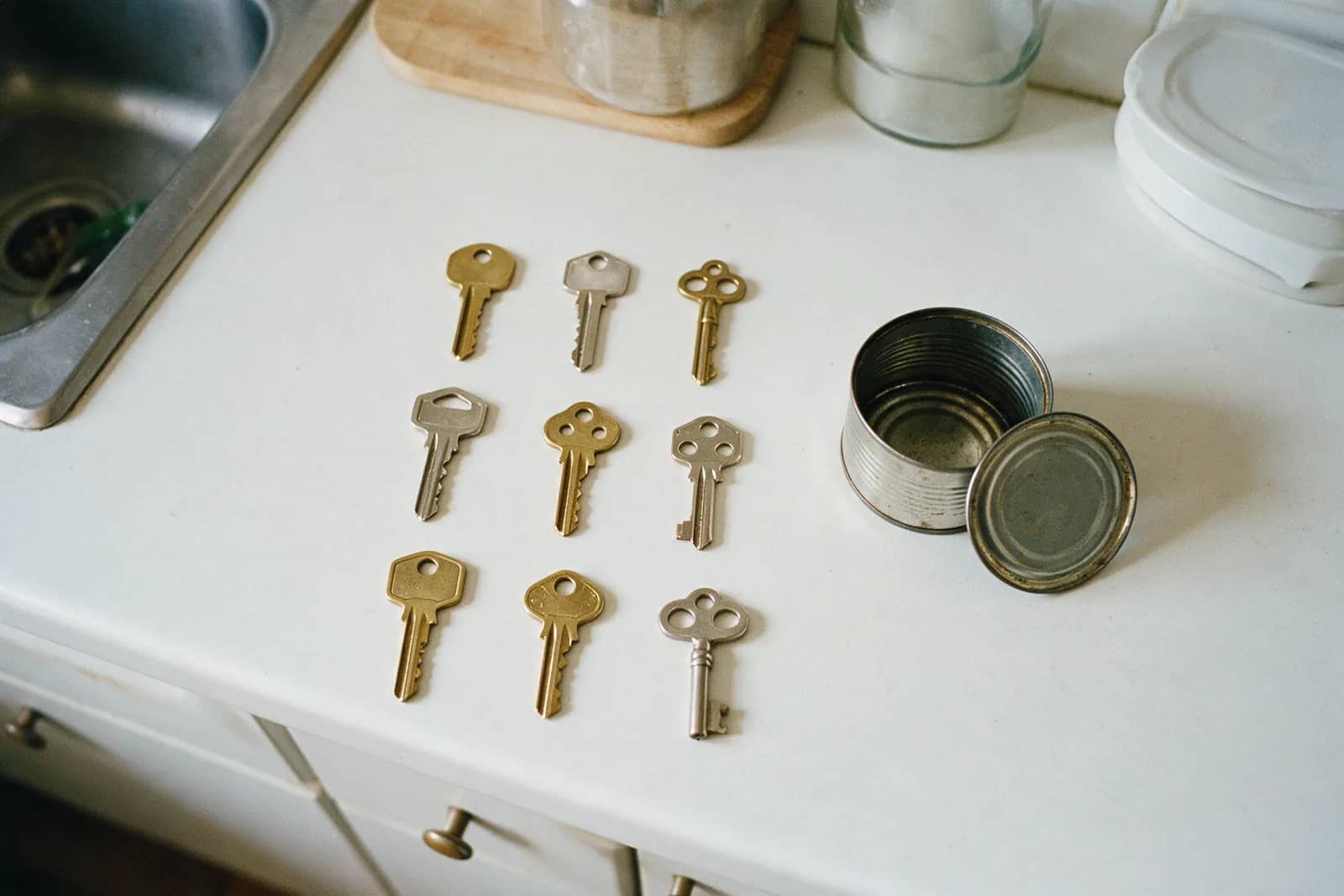
None of the nine was planned alongside the others. They arrived a decade apart, from different suppliers, fitted by whoever was on the job that year. The pool gate came with the pool. The lock over the garage came with the conversion. The mail block belongs to the road rather than to the house. That is why the ring in the kitchen drawer looks the way it does, and nobody assembled it on purpose.
Where the keys went, and why nobody can give you a number
A gardener comes weekly and needs the gate. A pool service needs the pool gate. Cleaning comes Tuesdays and has the front. The remodel two summers ago put a key in a lockbox on the handle, and the tile setter, the painter, the electrician and the appliance crew all worked out of it. A neighbor held one during a trip. A grown child kept one after moving out. Every one of those was a sensible decision on the day it was made.
Nobody in that list did anything wrong, and this is not a page about suspicion. It is a page about arithmetic. Ask a household how many cut keys to their front door exist right now and the honest answer is a shrug, which is a different thing from a low number. A key that has not come back is not evidence of anything. It is just an unknown left standing in a drawer somewhere.
So the useful question is not who you trust. It is whether you would notice. If one of the nine keys stopped coming back tomorrow, would anybody in the house know which door it opened. On most properties here the answer is no, and that is what a single afternoon of work fixes for good.
Which of the nine can share a key, and which never will
Six of them usually can: front door, garage service door, side gate, pool gate, cellar, and the room over the garage. The limit is the keyway, not the willingness. Cylinders made in different decades take differently shaped blanks, and a key from one family will not enter a lock from another no matter what is done to the pins inside. Where the property is a mixture, one cylinder gets swapped for a matching one and the set closes up.
Three of the nine stand outside any key plan. A safe runs on its own combination or its own key and never joins the household set. A mail block at the road, where a carrier opens the back of it, is arranged through the postal service rather than through this trade. And the driveway gate is a motor with a receiver, not a lock at all, though the walk gate standing beside it almost always has a cylinder that can join the rest.
There is a middle answer as well, for properties where one key for everything is too blunt. A master plan gives the gardener a key that opens the side gate and the pool gate and nothing else, while the household key opens all six. That is quoted by inspection rather than off a list, because it depends on what hardware is already hanging on the doors.
What it costs to bring six cylinders onto one key
Rekeying is new pins in the lock already on the door and a fresh key cut to match, at $34 to $52 per cylinder. The $89 service call sits inside that, counted once for the trip rather than once for each lock, which is why the second and third cylinders land at the low end of the range. Six cylinders on a property where the doors are clear is comfortably under two hours.
The line that moves the total is the mismatched keyway. If five cylinders are one family and the gate is another, that gate lock gets replaced with a matching one, and replacement with the hardware is $132 to $352. It is worth knowing before the van arrives, which is why the first thing asked on the phone is what the keys look like rather than what the doors look like.
Two habits make the visit worth what it cost. Walk every one of the six with the new key while the technician is still standing there, lock and unlock from both sides, including the gate that is stiff. And take the old ring out of the drawer and throw it away that evening, because a retired key kept for sentiment is the one that gets carried by mistake. Labor carries 90 days.
The two doors that fail first, and neither of them is the front
The front door gets used several thousand times a year, which keeps it honest. The side gate gets used twenty times, and the pool gate in a household with no small children sometimes gets used twice. A cylinder that sits outdoors through a dry summer with nothing turning in it goes stiff, then takes the key and refuses to rotate, then takes the key and spins without moving the latch. That last one is where most gate calls come from.
The other one is the safe. It is on the list of nine and it is the item nobody has opened since the house changed hands. No combination, no key, no paperwork, and a dial that may or may not still be true. It has its own article on this site, because opening it is a different trade inside the same van.
That is also what moves a price within its range. Which of the nine doors stopped is five different jobs, not one, and how long the lock sat untouched is the second half of it. A front door that was working yesterday and a pool gate nobody has turned since last summer take different amounts of time, and the quote reflects which one you are standing at.
The doors on the list that are not only yours
Some of the nine belong to more than one household. The gate at the entrance to a community up the hill, a shared driveway gate between two lots, the access system that a management company runs. This trade does not operate those, does not hold the list of who is switched on, and does not decide who has the standing to order work on a door that serves several homes.
That is settled on the call rather than on a driveway at night. We ask who is authorizing the work and take it from them before a van is sent, and that conversation takes a minute. It is a matter between you and the people who manage the property, and it is not something to be worked out with a technician standing at the curb.
On the doors that are wholly yours there is no such step. Identification with the address at the door, and the work begins when you say so. If today's problem is simply that the front door caught behind you, that is a house lockout at $134 to $255 with the $89 counted inside it, plus $52 if the arrival falls between 8pm and midnight or $94 between midnight and 7am, named before anybody starts driving.
One Saturday, one notepad, and the guessing stops
Pick an afternoon with nothing attached to it. Carry the whole ring around the property and try every key in every lock, including the two you never use. Write on the notepad which key opened which door and which lock fought back. That single hour turns an unlabeled ring into a list, and a list is what makes a phone call short later.
Anything that fought gets a mark. A key that needs jiggling today is a key that fails in January, and a gate cylinder that grinds is telling you it has about one season left. Neither of those is urgent, and both are far cheaper handled on a Tuesday afternoon than on the evening they finally quit.
When you do call, name the door rather than the address style. Front, garage service, side gate, pool gate, cellar, safe, the room over the garage, the mail block, the driveway gate: nine names, and the right one shortens everything after it. Arrival averages 19 minutes across the city from the base near Main Street, with Downtown at 12, Val Vista 15, Mission Park 16, Birdland 17, Vintage Hills 19, Stoneridge and Hacienda 21, Foothill and Castlewood 24 and Ruby Hill 26.
Quick answers
Can all nine doors really run on one key?+
Six of them usually can: front, garage service door, side gate, pool gate, cellar and the room over the garage, at $34 to $52 per cylinder. The safe keeps its own combination, a mail block at the road is arranged through the postal service, and the driveway gate is a motor rather than a lock. The limit on the other six is the keyway family, not the number of doors.
What if the gate lock takes a different key than the house?+
Then one cylinder gets swapped for one that matches the rest, and replacement with the hardware is $132 to $352. It is the usual reason a job lands at the top of a range instead of the bottom, and it is worth mentioning on the phone so the right part is on the van before it leaves.
I want the gardener to have the gate but not the house. Is that possible?+
Yes, with a master plan: one key for the side gate and pool gate, another that opens all six. That work is quoted by inspection rather than from a price list, because what it takes depends on the hardware already hanging on your doors. Labor carries 90 days either way.
Need it handled rather than read about?
(925) 940-2823More guides